
Multichannel Commerce
Management
Unify listings, inventory, and orders across Amazon, eBay, Walmart, Shopify, and other ecommerce channels from one operating layer.
Unified Multichannel Commerce
Multichannel commerce management unifies listings, inventory, and orders across Amazon, eBay, Walmart, Shopify, and other channels from one ecommerce operating layer.
Central hub
manages all channels from one dashboard.
Listing control
publishes and updates listings everywhere.
Inventory control
syncs stock to prevent oversells.
Order control
imports and tracks orders from every channel.
Amazon support
connects Amazon marketplace listings and orders.
eBay and Walmart
syncs eBay, Walmart, and major marketplaces.
Shopify storefront
unifies DTC storefront with marketplace sales.

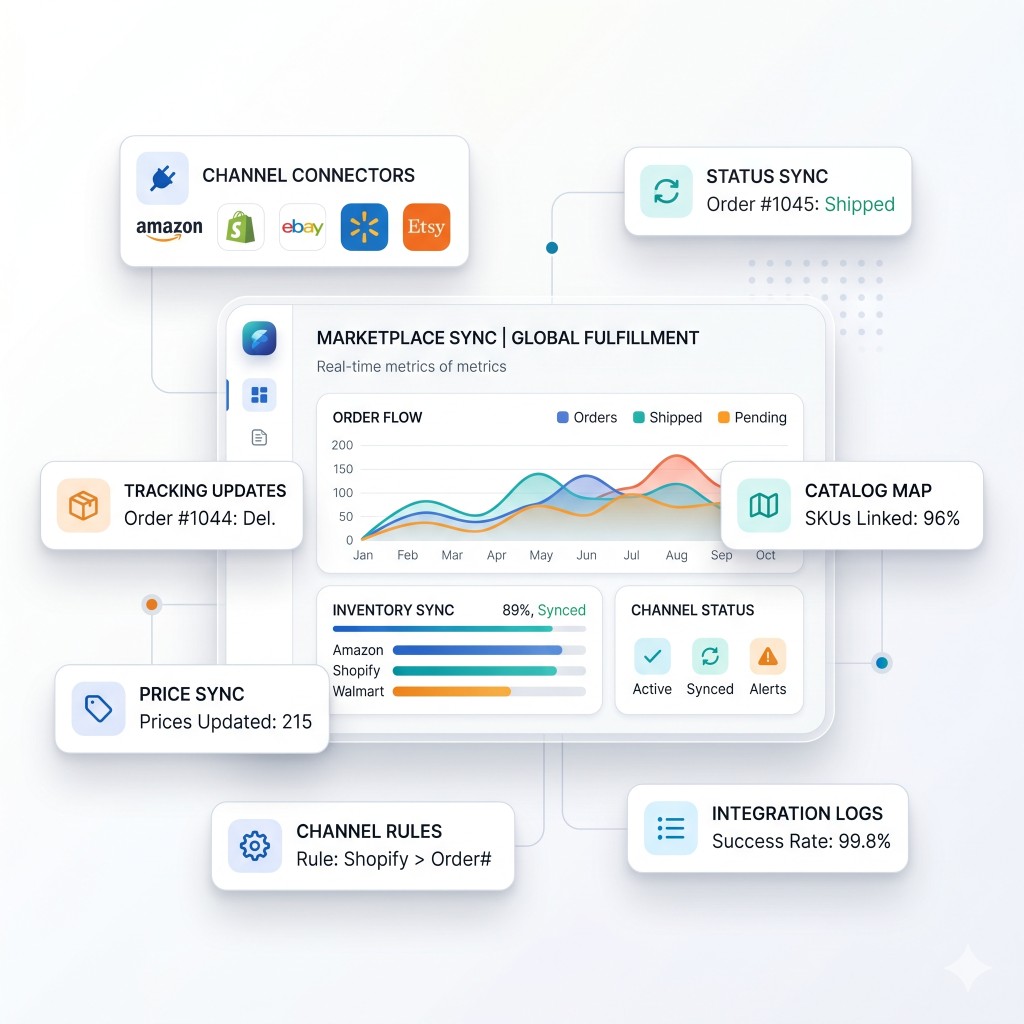
Listings, Inventory, and Orders
Multichannel commerce management software coordinates listings, inventory sync, and order fulfillment workflows so teams scale without multiplying tools.
Listing workflows
creates and updates channel listings in bulk.
Inventory workflows
deducts stock when orders import from channels.
Order workflows
routes channel orders to fulfillment teams.
Catalog mapping
maps master products to channel SKUs.
Pricing sync
applies pricing rules across marketplaces.
Error queues
organizes listing and sync failures for review.
Operations audit
stores channel actions and sync history.
Automated Channel Sync
Multichannel commerce management automates channel sync for listings, inventory, and orders so every marketplace stays accurate without manual updates.
Listing automation
pushes catalog changes to all channels.
Inventory automation
updates stock after sales and receipts.
Order automation
imports new marketplace orders continuously.
Price automation
applies repricing rules by channel.
Retry logic
retries failed sync jobs automatically.
Webhook triggers
starts workflows from channel events.
Sync audit logs
stores sync outcomes for troubleshooting.
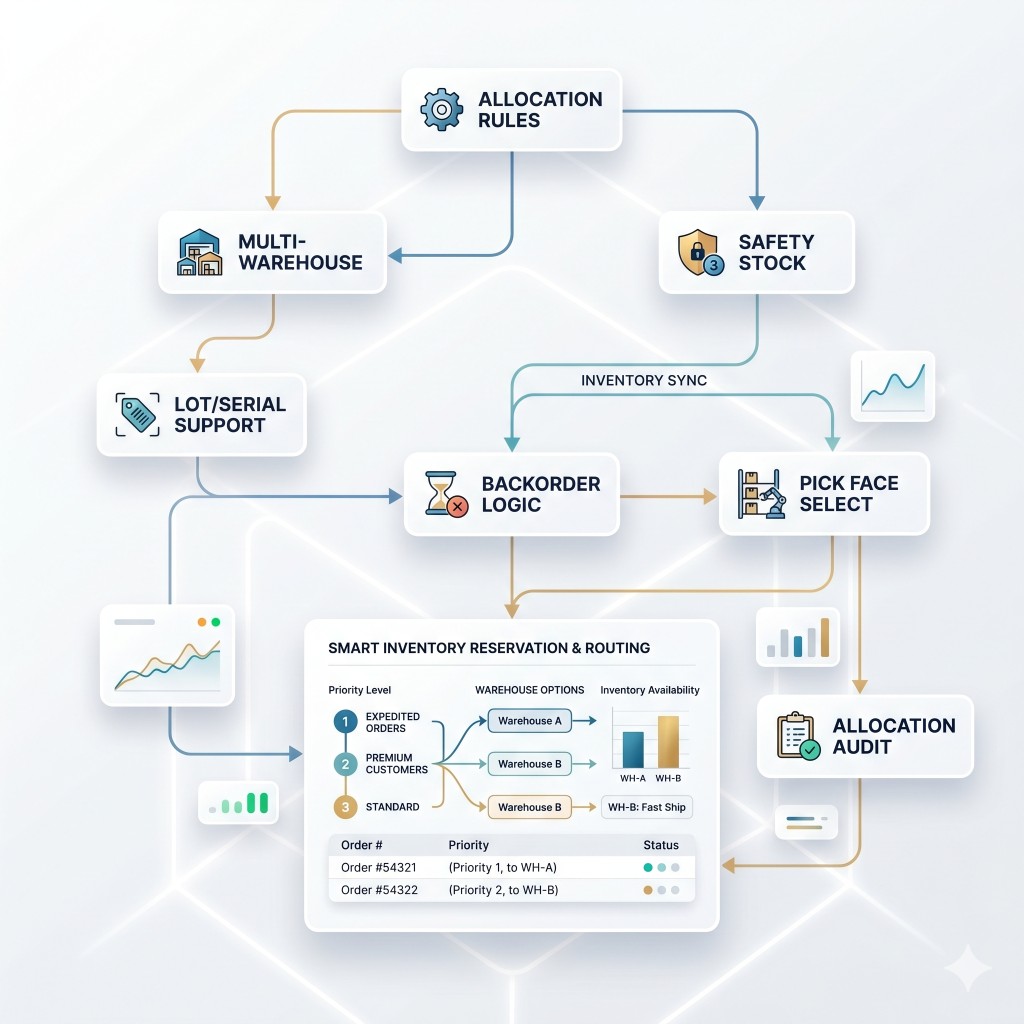

Multichannel Operations Dashboards
Multichannel commerce management dashboards track channel revenue, order volume, sync health, and listing accuracy for ecommerce growth teams.
Revenue by channel
tracks sales across every marketplace.
Order volume
measures daily orders by channel.
Sync health
monitors inventory and listing sync rates.
Listing accuracy
tracks active and error listings by channel.
Fulfillment SLA
monitors on-time ship performance.
Margin analysis
compares profitability by marketplace.
Export reports
shares KPIs with leadership and finance.
Ecommerce Growth Analytics
Multichannel commerce management connects sales and performance analytics to help brands optimize assortment, pricing, and channel investment decisions.
Channel scorecards
ranks marketplaces by revenue and margin.
Growth trends
highlights channel growth over time.
Assortment insights
shows top SKUs by marketplace.
Pricing insights
compares price performance by channel.
Sync impact
links sync health to sales outcomes.
Alert dashboards
surfaces SLA and sync risks early.
Leadership exports
shares growth reports with stakeholders.
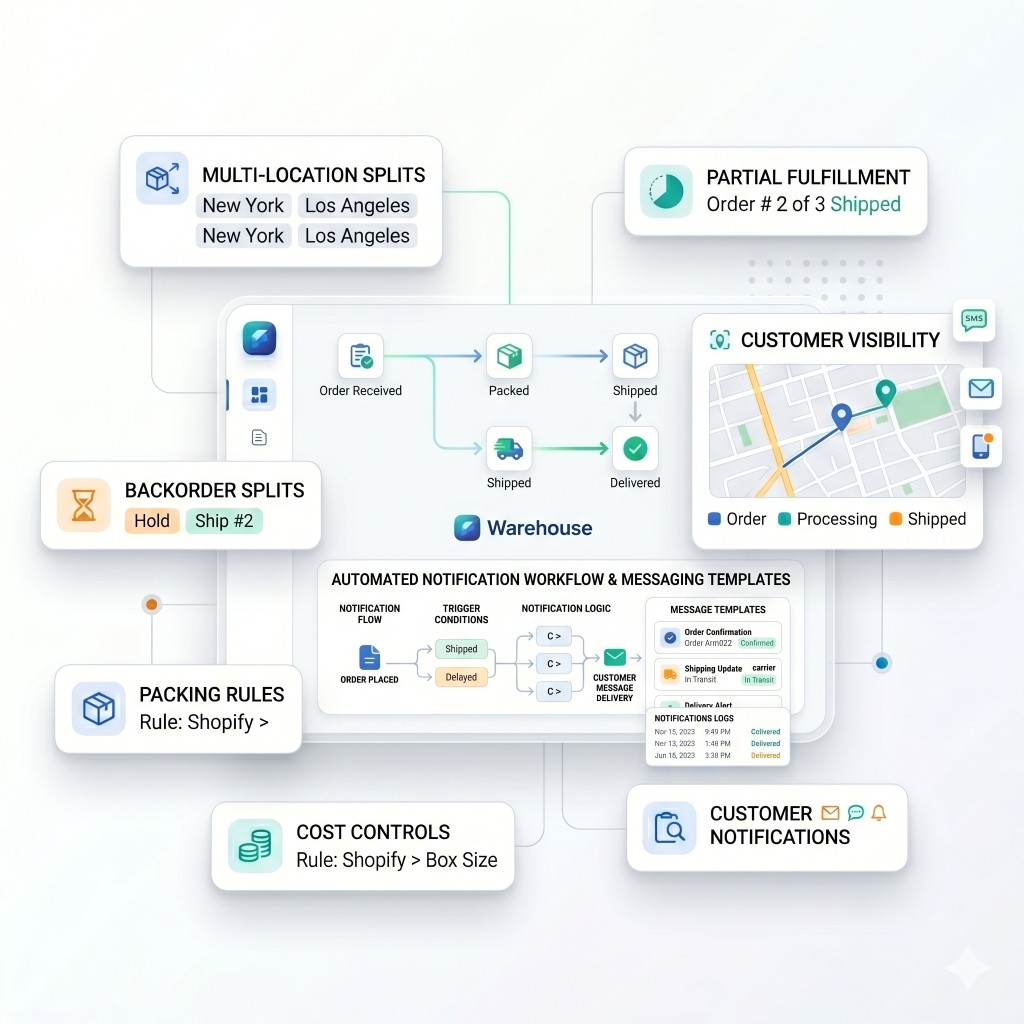
Six Core Benefits of Multichannel Commerce Management
Expand channel reach, prevent oversells, reduce manual work, and improve brand consistency and visibility with unified multichannel commerce management.
Expand channel reach
Expand channel reach with multichannel commerce management that unifies listings, inventory, and orders across Amazon, eBay, Walmart, Shopify, and more.
Prevent oversells
Prevent oversells with real-time inventory sync that updates stock across every connected marketplace after each sale event.
Reduce manual work
Reduce manual work with automated listing management, order import, and channel sync workflows from one platform.
Improve brand consistency
Improve brand consistency with centralized catalog mapping and listing rules that keep product data accurate everywhere.
Improve visibility
Improve visibility with multichannel operations dashboards tracking revenue, sync health, order volume, and listing accuracy.
Improve growth decisions
Improve growth decisions with ecommerce analytics comparing channel performance, margin, assortment, and pricing outcomes.
Frequently Asked Questions
Answers to common operational inquiries.